HSE Construction Safety Update
Enforcement and Inspection Focus
Recent prosecutions underline HSE’s firm stance on basic legal compliance and cooperation with inspectors. A North London construction director and his company, VNP Constructions Limited, were fined after repeatedly failing to comply with multiple Prohibition and Improvement Notices on a residential conversion project, with ongoing work at height risks and poor site management identified over several follow‑up visits. HSE emphasised that failure to comply with enforcement notices is treated extremely seriously and will result in prosecution where necessary.
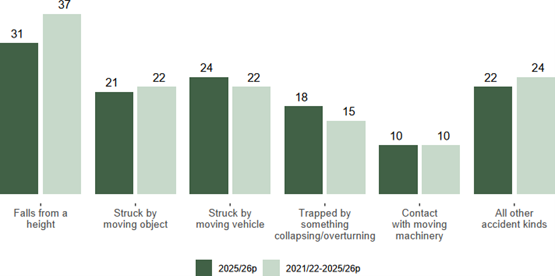
In a separate case, a sole trader was sentenced following a fall from height incident in which a worker was seriously injured, receiving an eight‑month suspended sentence, unpaid work and costs for failing to plan, manage and monitor work at height safely. Another construction company was fined £60,000 plus costs after a worker fell through an unprotected floor opening, with HSE stressing that all work at height is high‑risk and demands proper planning and implementation of controls.
Cooperation with Inspectors and Legal Duties
HSE is also highlighting the duty to cooperate with inspectors. In January, a site manager in Staffordshire was prosecuted after repeatedly obstructing HSE inspectors, refusing to identify himself, denying them access and issuing threats of violence during a visit to a construction site. He was fined £3,000, ordered to pay £6,450 in costs and a £1,200 victim surcharge, with HSE stating that obstruction of inspectors will not be tolerated and may lead to prosecution in rare but serious cases.
These cases collectively emphasise that duty holders must not only manage risks but also respond promptly to enforcement notices and cooperate fully with regulatory visits. Persistent non‑compliance, poor attitude and obstruction are increasingly likely to attract personal liability for directors and site managers as well as corporate penalties.
Building Safety Regulator – What Changes from January 2026?
From 27 January 2026, the Building Safety Regulator (BSR) becomes a standalone arm’s‑length body, moving out of the Health and Safety Executive to operate as an independent regulator sponsored by the housing department. This change, implemented by the Building Safety Regulator (Establishment of New Body and Transfer of Functions etc.) Regulations 2026 is a key Grenfell Tower Inquiry recommendation aimed at strengthening accountability and creating clearer oversight of building safety.
As a new corporate body, the BSR has its own board, powers to enforce building safety law, bring legal proceedings, charge for certain services and employ staff directly. Government has described the move as an “operational reset”, with expectations that the BSR will take a more assertive approach to enforcement, tighten oversight of higher‑risk buildings and drive culture change across the built environment.
Although its most direct impact is on higher‑risk residential buildings (HRBs), the BSR’s new status will influence standards more widely. Gateway processes, competence expectations and information requirements for HRBs are already setting benchmarks that clients, designers and contractors on lower‑rise housing schemes are increasingly expected to reference. For example, clearer golden thread information, better defined duty holder roles and formal competence checks for principal designers and principal contractors are now seen as best practice, not just HRB requirements.
For organisations in the housing and construction sector, practical implications include:
- Greater scrutiny of fire and structural safety decisions, even on non‑HRB projects that may share design features or materials.
- Stronger expectations around competence, record‑keeping and safety case information for those involved in design, construction and management.
- A likely shift towards closer collaboration between building control, fire and housing regulators, with less tolerance for poor documentation or late safety input.
February is a good time to review how your projects align with the emerging “single construction regulator” model: clear duty holder appointments, robust design decisions, documented competence, and a traceable safety story across the life of the building.
Priorities for Construction Businesses in February

- Check compliance with any existing HSE notices – Ensure that all Improvement and Prohibition Notices have been actioned, documented and, where relevant, formally closed out, with evidence available for any follow‑up visits.
- Reinforce work at height planning and supervision – Review work at height RAMS, access arrangements and edge protection, focusing on floor openings, fragile surfaces and small residential projects where recent incidents have occurred.
- Brief managers on cooperation with inspectors – Remind directors, site managers and supervisors of their duty to cooperate with HSE, including providing access, information and assistance during inspections.
- Consider BSR implications for current and future schemes – For projects involving residential buildings, check whether any are in scope of the higher‑risk regime and review how competence, design decisions and building safety information are being recorded in light of the BSR’s new status.
Focusing on these points will help construction businesses demonstrate robust legal compliance, support safer sites and be better prepared for the evolving building safety regime through 2026.
Beyond Accidents: HSE’s 2026 Focus on Health Risks and Asbestos Management
For 2026, HSE is making it clear that health risks on construction sites – not just accidents – are under intense scrutiny. Its 2025–26 Business Plan commits to 14,000 proactive inspections, with the majority in higher‑risk sectors such as construction and a strong emphasis on occupational health: asbestos, hazardous dusts, noise, musculoskeletal disorders and work‑related stress. This means site managers and duty holders can expect more questions about long‑term health controls, health surveillance and the quality of asbestos management, not just about immediate physical safety.
Health risks remain a key inspection target
Recent inspection initiatives and communications confirm that HSE inspectors are increasingly targeting sites where dust, noise and manual handling risks are poorly managed. Typical issues identified include inadequate local exhaust ventilation, inconsistent use and face‑fit testing of RPE, poor housekeeping leading to airborne dust, and limited or absent health surveillance for workers regularly exposed to noise or vibration. HSE’s agenda highlights that ill‑health – rather than acute accidents – now accounts for most working days lost, driving its decision to prioritise health risk management in 2026.
For construction and housing projects, this means:
- Demonstrating effective dust control at source (water suppression, LEV, on‑tool extraction) for cutting, grinding and chasing.
- Ensuring hearing protection is properly selected, used and supervised where noise levels are high, supported by suitable health surveillance.
- Tackling manual handling and musculoskeletal strain through planning, mechanical aids and realistic productivity expectations, not just “lift safely” posters.
Asbestos – consultation and future change
Asbestos remains a key priority. In November 2025, HSE launched a formal consultation on proposals to strengthen the Control of Asbestos Regulations, aiming to enhance protection for workers and the public. The consultation looks at improving the quality and scope of asbestos surveys, clarifying requirements for notifiable non‑licensed work, and reinforcing the independence and competence of analysts and those carrying out clearances. It also considers how better data, recording and long‑term management can support safer refurbishment and maintenance work in buildings containing asbestos.
Although new regulations will not take effect immediately, the consultation signals the direction of travel. Duty holders in the construction and property sectors should anticipate:
- Tighter expectations on survey quality and scope before refurbishment or demolition work begins.
- Greater scrutiny of how survey information is communicated to contractors and operatives on site.
- Enhanced competence and independence requirements for those carrying out four‑stage clearances and air testing.
What this means for construction and housing projects
For developers, contractors and property managers in the housing and low‑rise sector, these health and asbestos priorities translate into some clear practical steps. HSE and sector commentary consistently highlight the need for stronger planning at pre‑construction stage, better integration of health risks into RAMS, and more robust monitoring of controls once work starts on site. This is particularly important on refurbishment and maintenance work on pre‑2000 housing stock where asbestos, dust and manual handling risks routinely arise.
Key expectations include:
- Health risks (dust, noise, vibration, manual handling) considered with the same weight as falls, plant and other safety issues in risk assessments and method statements.
- Clear evidence of ongoing health surveillance where workers are regularly exposed to significant noise, vibration or certain hazardous substances.
- Asbestos registers and refurbishment/demolition surveys that are current, sufficiently intrusive for the planned work and actually used to brief those doing the job.
To align with HSE’s 2026 focus, organisations should use February to:
- Review health risk assessments and controls – Check that dust, noise, vibration and manual handling risks are properly assessed on all relevant projects, with clear, specific control measures and not just generic text.
- Strengthen health surveillance arrangements – Confirm that health surveillance is in place where required (e.g. for regular exposure to loud noise, hand–arm vibration or certain hazardous substances) and that records are up to date and reviewed.
- Audit asbestos management and surveys – For refurbishment and maintenance work, review the quality and completeness of asbestos surveys and how information is shared with contractors; address gaps now in anticipation of tighter requirements after the consultation.
- Update RAMS and briefings for site teams – Integrate clear, practical controls for health risks and asbestos into RAMS and toolbox talks, focusing
By acting now on health risks and asbestos management, construction businesses can reduce long‑term harm, improve working conditions and be better prepared for the next wave of HSE inspections and regulatory change.
Construction Site Welfare – More Than Just Compliance
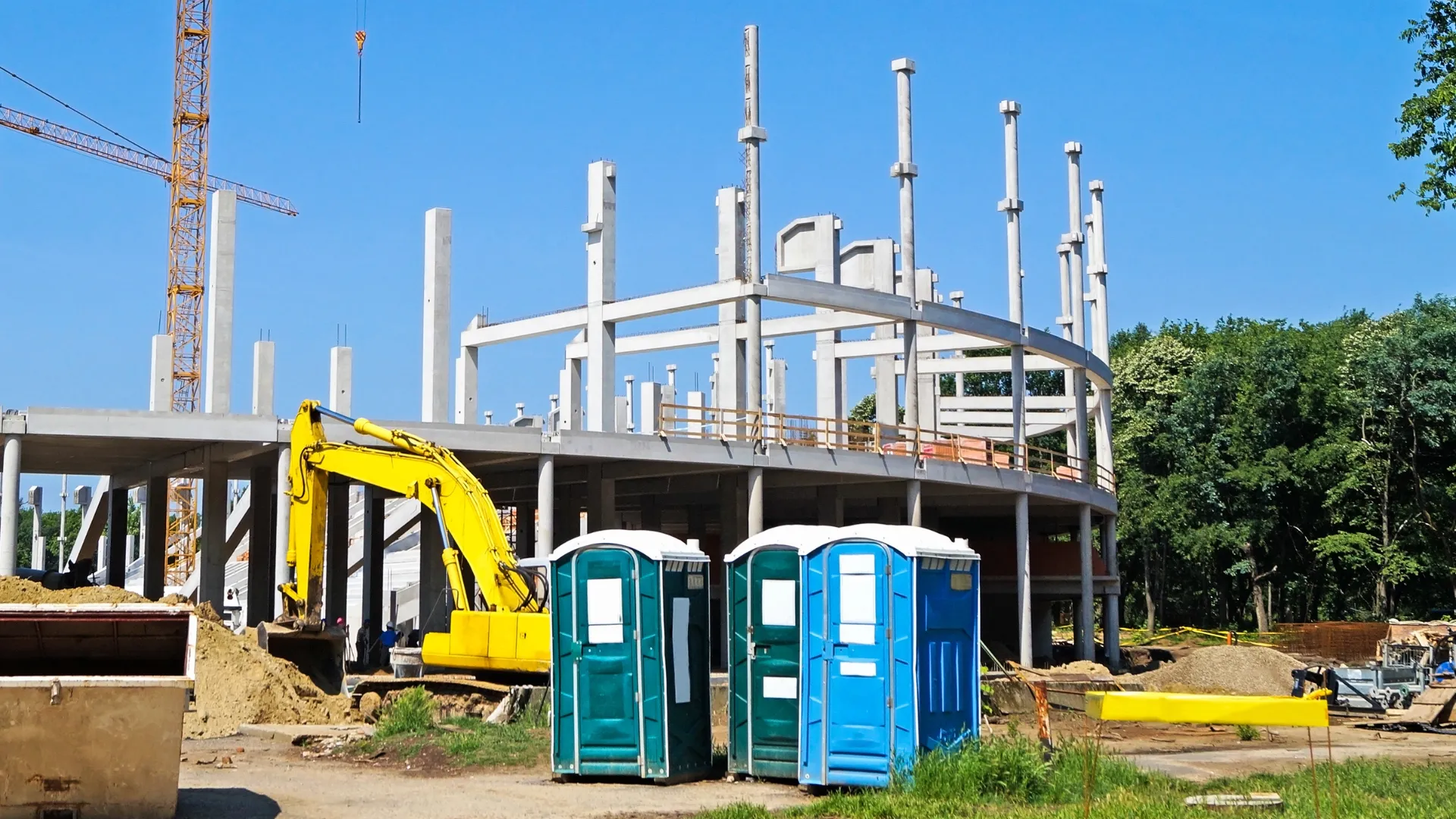
HSE and industry bodies continue to highlight construction site welfare as a core standard, not a “nice to have”. Guidance issued in recent years sets out what inspectors expect under CDM 2015: adequate toilets, hand‑washing, drying and changing facilities, rest areas and arrangements for food and hot drinks. Updated welfare guidance followed frequent reports of poor hygiene and sanitation on sites, with particular attention on cleanliness, privacy, ventilation and capacity relative to workforce size.
Beyond legal compliance, improved welfare is now strongly linked to productivity, retention and safety culture. Industry commentary suggests that better welfare facilities correlate with higher worker satisfaction and fewer incidents, with some data indicating up to 20% higher satisfaction and around 15% lower incident rates on sites with good welfare provision. HSE’s increased focus on welfare in 2026 reflects a broader view that how workers are treated day‑to‑day is a strong indicator of wider standards on site.
Construction Site Welfare – More Than Just Compliance
HSE and industry bodies continue to highlight construction site welfare as a core standard, not a “nice to have”. Guidance issued in recent years sets out what inspectors expect under CDM 2015: adequate toilets, hand‑washing, drying and changing facilities, rest areas and arrangements for food and hot drinks. Updated welfare guidance followed frequent reports of poor hygiene and sanitation on sites, with particular attention on cleanliness, privacy, ventilation and capacity relative to workforce size.
Beyond legal compliance, improved welfare is now strongly linked to productivity, retention and safety culture. Industry commentary suggests that better welfare facilities correlate with higher worker satisfaction and fewer incidents, with some data indicating up to 20% higher satisfaction and around 15% lower incident rates on sites with good welfare provision. HSE’s increased focus on welfare in 2026 reflects a broader view that how workers are treated day‑to‑day is a strong indicator of wider standards on site.
Key points for construction and housing projects include:
- Toilets and wash facilities that are hygienic, regularly cleaned, supplied with hot and cold water, soap and drying materials, and suitable for the size and mix of workforce.
- Rest rooms that are warm, dry and comfortable, with seating, tables and facilities to prepare and store food safely.
- Adequate storage and drying space for PPE and clothing, particularly during wet or cold weather, supporting both comfort and infection control.
Best practice examples highlighted by schemes such as the Considerate Constructors Scheme include enhanced rest spaces, quiet rooms, improved changing and shower facilities and inclusive layouts that support a more diverse workforce. For many clients and principal contractors, investing modestly in welfare is now seen as an effective way to boost morale, improve attendance and demonstrate commitment to worker wellbeing alongside compliance.
HSE in 2026 – Being Inspection‑Ready
HSE’s 2025–26 Business Plan commits to delivering around 14,000 proactive inspections, with construction a major focus sector. Commentary on HSE priorities indicates that inspections in 2026 will look closely at both safety and health risks, as well as overall management systems, worker engagement and how lessons from previous incidents are embedded. The message is that inspections will “go beyond paperwork”, focusing on what is actually happening on site.
Key focus areas for construction inspections this year include management of health risks (dust, asbestos, noise, MSDs and mental health), work at height and temporary works, plant and vehicle safety, and adequate welfare facilities. Inspectors will expect to see evidence that risks are identified, controls are in place and maintained, and that supervisors and workers understand what is required of them. Sites with repeated basic failings – for example, poor housekeeping, missing edge protection or substandard welfare – can expect enforcement action and, in serious cases, prosecution.
Practical steps to stay “inspection‑ready” include:
- Keeping risk assessments, RAMS and site rules live and relevant to the actual work and conditions, not filed away once issued.
- Ensuring pre‑start briefings and toolbox talks are recorded and effectively delivered, particularly on high‑risk activities such as work at height, lifting operations and asbestos disturbance.
- Maintaining visible standards on site – clear access routes, good housekeeping, compliant scaffolds, guarded edges, safe plant segregation and clean, usable welfare.
Organisations that treat inspections as an opportunity to validate their systems, rather than a threat, tend to be better prepared and gain more value from inspector feedback. In 2026, aligning day‑to‑day practice with HSE’s stated focus areas – health risks, welfare, planning and competence – will be key to demonstrating that sites are not only compliant on paper but genuinely well‑managed.

Speak with our Safety Experts