New Starters, Young Workers and Summer Site Safety
As construction activity increases through the summer, many sites see an influx of apprentices, work experience students, temporary labour and new starters covering holidays or supporting increased workloads. While this can help maintain programme and productivity, it also brings added risk. HSE makes clear that young people and inexperienced workers are more likely to be injured, particularly in the first six months of a job, because they are less familiar with workplace risks and may need more support than experienced operatives. For clients, principal contractors and site managers, this means induction, supervision and clear planning become even more important during the busy summer period.
Why new and young workers need extra attention
HSE’s guidance states that employers have the same responsibility for the health, safety and welfare of young workers as they do for any other employee, but they must also consider whether a young or inexperienced person is at greater risk due to lack of experience, immaturity or limited awareness of hazards. In higher-risk industries such as construction, employers are expected to review the work involved, the risks to be managed, and whether the instruction, training and supervision arrangements have been properly thought through and work in practice.
This matters because inexperienced workers may be less likely to challenge unsafe instructions, may not recognise when a task is outside their competence, and can sometimes be eager to impress by “getting stuck in” before they fully understand the risk. They may also be less familiar with the long-term health risks associated with noise, vibration, dust, hazardous substances and extreme temperatures, which HSE specifically highlights when young people are employed in higher-risk environments.
Before they start – induction and preparation

HSE’s construction guidance is clear that every site worker must receive a suitable site induction, and that the induction must be site-specific and proportionate to the risks they may face. For new starters and young workers, this should go beyond a quick briefing or a signature on a form. It should explain the project, site rules, first aid arrangements, emergency procedures, accident reporting, welfare arrangements and the individual’s own responsibilities for health and safety.
Before a young person starts, employers should review their risk assessment if they have not recently employed someone of that age or experience level, or if the individual has particular needs. In practice, this means thinking carefully about the tasks they will do, what they will be allowed to observe, the equipment they may come into contact with, and any legal age limits that apply to certain machinery or activities. Good preparation also includes making sure that supervisors know in advance who is arriving, what that person is allowed to do, and who is responsible for overseeing them on site.
On the job – supervision, support and safe limits
HSE states that young people may need more supervision than adults. On a construction site, which means more than simply placing them with a gang and assuming they will “pick it up.” Supervisors need time to show them how work should be done, check understanding, correct unsafe habits early and make sure they are not drifting into tasks beyond their competence.
 Simple steps can make a big difference:
- Pairing young or new workers with experienced operatives who set the right standards.
- Keeping early tasks straightforward and well controlled, rather than exposing them immediately to the highest-risk activities.
- Checking regularly that they know how to raise concerns, report accidents or stop work if something feels unsafe.
Where summer conditions are added into the mix, extra care is needed. Heat, fatigue, dehydration and longer days can affect concentration and decision-making, and these factors may be more significant for workers who are still getting used to the pace and expectations of site work.
Health risks and welfare matter too
Young and inexperienced workers do not just need protecting from visible accident risks. HSE specifically highlights exposure to noise, vibration, toxic substances and extreme temperatures as matters that must be considered where young workers are employed. That is particularly relevant on construction sites in the summer, where outdoor work, hot conditions, dust, hand-held power tools and noisy plant may all be present at the same time.
Welfare also plays an important part. Access to drinking water, rest areas, clean welfare facilities and supportive supervision helps create an environment where new workers are more likely to speak up, ask questions and avoid the “just get on with it” mindset that can lead to incidents. A good safety culture is often most visible in how a site treats people at the start of their working life, not just how it responds when something goes wrong.
Practical actions for June
To manage summer workforce changes safely, construction businesses should:
- Review inductions to ensure they are site-specific, clear and suitable for people with little or no previous site experience.
- Check risk assessments for any young workers, apprentices or work experience placements, especially if the site has not recently hosted similar individuals.
- Set clear task limits so new starters are not exposed to work beyond their competence or age-related restrictions.
- Provide visible supervision and buddying arrangements during the first weeks, not just on day one.
- Talk about health as well as safety, including heat, dust, noise, fatigue and hydration during summer working.
- Make reporting easy so workers know how to raise concerns, ask for help and report near misses without fear of criticism.
Getting the basics right for new and young workers is not just about legal compliance – it is about setting standards early, preventing avoidable incidents and helping the next generation of construction workers build safe habits from the start.
HSE Construction Safety Update – June 2026
Roofer falls through unguarded loft hatch
In May, Willow Services (Southern) Ltd was fined £20,000 plus costs after a roofer suffered life‑changing injuries falling through an unprotected loft hatch while re‑roofing a domestic property in Wimbledon. The 41‑year‑old stepped onto the open hatch while stripping insulation in the roof space and fell around 11 feet to the floor below, fracturing his vertebra and hip and leaving him unable to return to work. HSE’s investigation found the work at height had not been suitably planned, there were no adequate measures in place to prevent falls, and there was no competent supervision of the job.
This case reinforces that even on relatively small domestic projects, loft hatches and other openings must be identified and properly protected, and that supervisors must ensure work at height is planned and monitored, not left to individual judgement.
Large-scale asbestos disturbance – client and contractor prosecuted

In March, Sohan Group Limited (client), Maize Metals Limited (demolition contractor) and an individual site manager were sentenced following a major asbestos disturbance and illegal clearance operation at a demolition site in Cannock. Demolition was allowed to proceed despite evidence of asbestos in the building, and an unlicensed individual was engaged to remove asbestos‑containing materials without the necessary licence or competence.
The client, who failed to appoint a principal contractor, was fined £74,900 for breaching CDM regulation 5(4), the demolition contractor was fined £13,400 for failing to plan, manage and monitor work under regulation 15(2), and the site manager received a 26‑week suspended prison sentence, a five‑year director disqualification and an electronically monitored curfew. HSE and legal commentary have used the case to underline that both clients and contractors will be held to account where asbestos risks are ignored or handed to unlicensed parties.
Key messages for June
Treat every opening as a fall risk: Identify and protect loft hatches, shafts and floor openings, including on small domestic and refurbishment jobs, and ensure competent supervision of all work at height.
Get CDM roles and asbestos planning right: Make sure a principal contractor is formally appointed where required, refurbishment/demolition surveys are acted on, and only licensed contractors deal with licensable asbestos work.
Use new‑starter season to reset standards: With apprentices and new workers joining for the summer, revisit inductions, supervision arrangements and work at height/asbestos briefings so expectations are clear from day one.
June 2026 – New Starter & Summer Safety Checklist
 Use this quick checklist as a prompt during June site walks or supervisor meetings.
- Inductions up to date
- All new starters, apprentices and agency staff given a site‑specific induction that reflects current works, risks and emergency arrangements.
- Clear task limits for new/young workers
- Young or inexperienced workers only given tasks that match their competence and any age‑related restrictions, with higher‑risk activities reserved for experienced staff.
- Visible supervision and buddying
- Named supervisors know who the new starters are and have time to supervise them, with “buddy” arrangements in place for at least the first few weeks.
- Openings and loft hatches checked
- Loft hatches, shafts and floor openings identified, covered or guarded, and specifically included in work at height inspections and briefings.
- Asbestos information available and understood
- Refurb/demolition surveys on hand, key findings briefed to supervisors and gangs, and only licensed contractors used where licensable work is required.
- Summer conditions built into planning
- Heat, hydration, sun exposure and longer days considered in RAMS and daily planning, with extra attention to new starters who may not yet be acclimatised.
A five‑minute review against these points once or twice in June can help catch issues early and show that new workers and summer conditions are being managed, not left to chance.
Environmental Focus for June 2026 – Run-Off, Refuelling and Ecology on Live Sites
As projects move further into the summer period, environmental risks often become more site-specific and less obvious than general housekeeping or waste control. June is a good time to look closely at three areas that frequently cause problems on construction sites: surface water run-off, refuelling and spill prevention, and ecology constraints such as nesting birds. These issues can lead to delays, complaints and enforcement if they are not identified early and managed properly.
Surface Water Run-Off and Silt Control
Open ground, stockpiles, trenching and changing weather can all increase the risk of silty water leaving site and entering drains, ditches or nearby watercourses. Environment Agency pollution prevention guidance for construction and demolition sites (PPG6 / updated GPP6 and CIRIA C532) emphasises that run‑off must be controlled at source and kept out of surface water systems.
Good practice includes:
- Minimising the amount of exposed ground at any one time and stripping vegetation/topsoil in phases.
- Identifying drains, ditches and watercourses on drawings and protecting them with cut‑off ditches, bunds or temporary barriers.
- Planning dewatering and pumping so that dirty water is contained, settled or treated rather than discharged directly to drains or watercourses.
Where sites are on a slope or close to existing drainage infrastructure, sequencing the work and protecting completed drainage features becomes especially important.
Refuelling, Oils and Spill Prevention
 Refuelling and storage of oils, fuels and chemicals are common sources of pollution incidents on English construction sites. Environment Agency guidance on pollution prevention expects fuel and chemical storage to be on impermeable surfaces with controlled drainage, positioned away from surface water drains and watercourses.
Key points include:
- Storing fuel tanks, bowsers and chemical containers in suitably bunded areas, protected from vehicle impact.
- Keeping funnels, small containers and associated equipment within the same contained area when not in use.
- Using suitable mobile bowsers for refuelling, with drip trays and on‑board spill kits, and ensuring those who refuel know exactly what to do if a spill happens.
Spills should be cleaned up immediately, using appropriate absorbents, and serious pollution incidents must be reported to the Environment Agency via the incident hotline.
Nesting Birds and Seasonal Ecology Constraints
June is firmly within the nesting bird season in England. Trees, hedgerows, scrub, roof spaces and structures due for demolition or alteration may all contain active nests. Under the Wildlife and Countryside Act, it is generally an offence to damage or destroy an active nest or to take or destroy eggs, and certain species are afforded even higher levels of protection.
For construction sites, this means:
- Planning major vegetation clearance and demolition works outside the March–August nesting period where possible.
- Commissioning ecological surveys and advice and working with a qualified ecologist where nests or protected species are likely, in line with Natural England expectations.
- Briefing site teams to remain alert to signs of nesting (for example repeated bird activity in one area) and to stop work in the immediate vicinity if a suspected active nest is found until competent advice has been obtained.
Four Quick Environmental Checks for June
Run‑off controls: Walk the site to confirm that exposed ground, stockpiles and trenches are not allowing silty water to reach surface drains, ditches or watercourses, and that any pumping/dewatering is controlled.
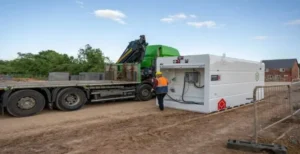 Fuel and chemical storage: Check that tanks, bowsers and containers are bunded, labelled, secure and located away from surface water drains, with protection against vehicle impact and vandalism.
Spill response: Make sure spill kits are available where they are needed, staff know how to use them, and everyone understands how to report a significant environmental incident to management and the Environment Agency.
Ecology and nesting birds: Before any hedge, tree or scrub works, or roof/demolition work that could disturb nests, confirm whether the timing is appropriate and whether ecological advice is needed.
Aligning environmental controls with current Environment Agency and wildlife law expectations helps avoid disruption in the summer months and supports the wider message that your sites are well managed in every respect
Speak with our Safety Experts