If you spend any time around construction health and safety, you start to notice the same questions coming up repeatedly.
Do hard hats have to be worn at all times? Who is responsible for the construction phase plan? What actually needs reporting? How serious is dust exposure if the job only takes a short while?
These are not unusual questions. In fact, they are common enough that the HSE has a dedicated construction FAQs section covering general issues, safety topics and health risks. That alone tells you something. Even where the rules exist, there is still a lot of uncertainty around how they apply to real sites.
A Lot of Confusion Starts with The Practical Stuff
For many construction businesses, the greatest difficulties are not always the major regulations themselves. It is the day-to-day interpretation of them.
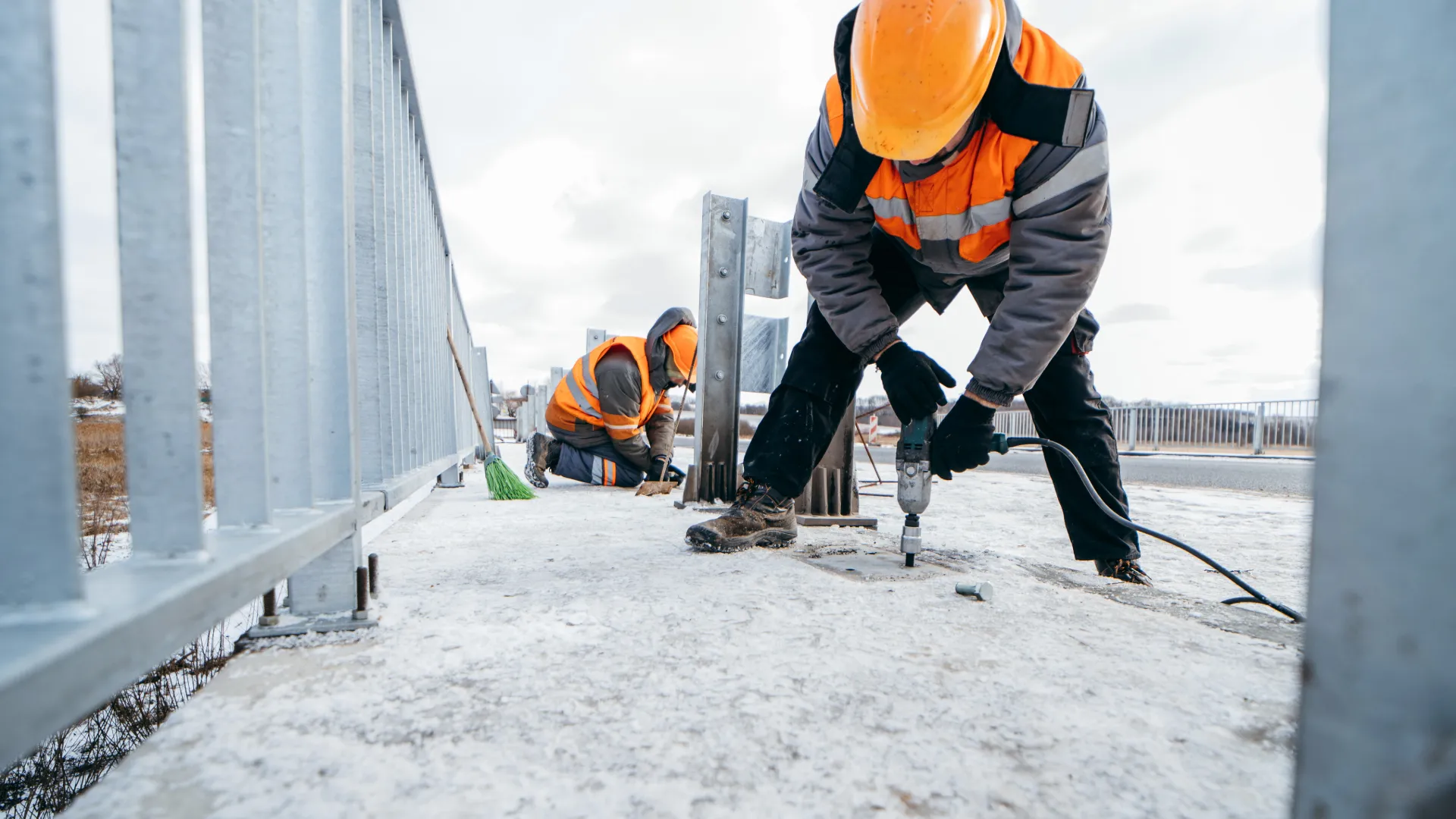
Take head protection as an example. HSE’s guidance is clear that on almost all construction sites, the risk of head injury is such that the law requires suitable head protection to be worn. At the same time, the guidance also makes the point that work should still be organised to minimise risk first, rather than relying on PPE alone. That distinction matters because it shifts the conversation away from simply issuing hard hats and towards managing the site properly in the first place.
This is often where businesses get caught out. PPE is visible, easy to enforce, and straightforward to discuss. But it is only one part of the wider picture. Good site safety still depends on planning, supervision, housekeeping and control measures that reduce risk before PPE becomes the last line of defence.
CDM Questions are Still Some of the Most Common
Another area that regularly confuses is CDM.
One of the simplest but most important HSE answers is that if you are the only contractor on the job, or the principal contractor, you must draw up a construction phase plan. HSE also makes clear that the plan should be proportionate to the size and scale of the work. So, it does not always need to be a lengthy document, but it does need to exist before work starts.
That point is easy to overlook on smaller projects, especially where businesses assume CM only really matters on larger or more complex jobs. The paperwork may be lighter on a small job, but the duty to plan and think through health and safety remains. And for growing contractors, this is often where standards start to vary from site to site if there is no consistent process behind it.
HSE also confirms that one person or organisation can carry out more than one CDM duty holder rule, provided they have the skills, knowledge, experience and organisational capability to do so properly. That sounds straightforward, but it places real responsibility on the business to be honest about whether it genuinely has the capacity to manage those duties well.
Health Risks are Still Underestimated
Construction safety conversations often focus on visible hazards. Falls. Vehicles. Lifting. Plant. Things that feel immediate.
But the HSE FAQ pages also give a lot of space to health risks, and this is telling. The construction FAQ’s link out to topics including noise, vibration, skin exposure, asbestos, welfare, manual handling and dust. It is a reminder that health risks are inseparable from construction safety. They are part of it.
Dust is probable one of the clearest examples. HSE states that the sin dust-related diseases affecting construction workers include lung cancer, silicosis, COPD and asthma. It also cites research estimating that silica may be responsible for more than 500 deaths each year among people who have worked in construction, while around 4,000 people die each year from work-liked COPD, with construction working among the at-risk groups.
That tends to change the tone of the conversation quite quickly.
Because once dust is seen as a long-term health risk rather than just a nuisance on site, control measures stop feeling like an optional extra. HSE’s guidance points to practical controls such as reducing cutting and preparation where possible, choosing different methods of work, and, more importantly, stopping dust getting into the air in the first place.
Plant and Equipment Questions Usually Come Down to Control
The same pattern appears with the plant and machinery. On paper, many businesses know that equipment needs to be suitable, maintained and used properly. But the real questions usually appear around specific equipment and specific tasks.
HSE’s construction plan FAQ includes guidance on quick hitches for excavators, explaining that the most fatal incidents have involves semi-automatic hitches. It also explains the risk clearly: if the locking pin is not inserted, the machine may still appear to work, but the attachment can work loose and fall off unpredictably. HSE notes that these hitches are not banned, but safe use depends on following the manufacturers instructions, along with proper monitoring and supervision.
That is a useful example because it reflects a wider truth in construction safety. The issue is often not whether a piece of equipment exists on site. It is whether the process around it is being managed properly. Competence, checking, supervision, and consistency usually matter just as much as the equipment itself.
What These FAQ’s Really Tell Us
The HSE construction FAQs are useful because they show where uncertainty still sits in the industry.
And it is not always in the areas people expect.
A lot of the questions are not especially complicated, but they sit right at the point where legislation meets real working practice. That is usually where confusion starts. A business may know the broad rule but still be unsure how far it applies, what is proportionate, or where responsibility sits.
For many businesses, this is the real value of reviewing questions like these. They highlight the everyday areas where small misunderstandings can lead to inconsistent standards, weak documentation, or site controls that are not as strong as they should be.
Why This Matters for Construction Businesses
Health and safety problems do noy always begin with major failures. Quite often, they begin with uncertainty.
A requirement is assumed rather than checked. A document is skipped because the project seems too small. A control measure is treated enough without looking at the wider risk. Over time, those small gaps can turn into much bigger ones.
This is where practical support can make a difference. At Hurst Setter, the value is not in repeating legislation back to business. It is in helping make sense of how those duties apply on actual construction sites, with systems and processes that are realistic, proportionate and easier to maintain.
If you are finding that the same health and safety questions keep coming up across projects, it is usually a sign that the business would benefit from a clearer and more consistent approach.
Speak with our Safety Experts