HSE Construction Safety Update – October 2025
Recent Enforcement Highlights
Child Injured on Construction Site: Sage Homes Limited and its director were fined after a five-year-old child was injured by a falling cast iron soil pipe outside a school. The incident, which took place in Southampton, exposed key failings around risk assessment and site management near public spaces. HSE inspectors underlined that simple and inexpensive steps—like securing breached pipework—could prevent such accidents. Both the company and its director faced fines and significant costs, serving as a strong reminder that regulatory breaches will be met with decisive action.
Employee Fatality Due to Collapsing Wall: H. Mealing & Sons Limited was fined £56,775 plus £44,000 in costs after a worker, Gary Anstey, was fatally crushed by a 1.8m-high retaining wall at Swainswick School, Bath. Inspectors called out chronic problems with planning and supervising temporary works, noting that lack of support and written procedures remain common failings. HSE stresses the need for design compliance, proper installation, and clear documentation for any temporary structure.
Scaffold Fatality: A sign fitting company and its director were fined after a 64-year-old worker died following a fall from an unguarded scaffold platform. The incident underscores the continued significance of fall prevention in construction and the importance of adherence to work-at-height guidance.
Industry Fatality Statistics
Deaths Down, Sector Still High Risk: Latest statistics show 35 construction workers died in work-related incidents Apr 2024–Mar 2025—a drop from previous years, but construction remains the most hazardous sector, accounting for 28% of all work fatalities. Notably, over half of construction deaths were caused by falls from height, and self-employed workers were disproportionately affected (45% of all construction fatalities).
Asbestos Still a Legacy Issue: HSE’s annual figures for mesothelioma—primarily caused by past asbestos exposure—show 2,218 deaths in 2023, a gradual decline likely to continue over the next decade.
Key Safety and Regulatory Trends
Temporary Works and Risk Management: Enforcement actions show HSE is prioritising checks on temporary structures and risk management protocols, expecting written plans, design compliance and more rigorous supervision at sites.
Mental Wellbeing and Disease Prevention: There is now heightened attention on occupational health—especially mental wellbeing, noise, dust, vibration, and manual handling risks. HSE expects companies to assess psychological safety and prevention of occupational diseases as part of their compliance programme.
Tech to the Fore: Wearable safety technology—smart wristbands, sensors and real-time monitoring—is gaining ground, with innovations in hazard alerts, heat stress checks, and emergency-response activations being deployed in major projects. These technologies are increasingly seen as essential in accident prevention and regulatory compliance.
Strengthened SSIP Requirements: Contractors bidding for new projects are now frequently required to join Safety Schemes in Procurement (SSIP) platforms—meaning additional documentation, robust risk assessments, evidence of training, and detailed policies are necessary to win tenders.
Practical Guidance
- HSE urges construction businesses to refresh temporary works planning, ensure all hazards are considered—even outside the immediate site boundary—and make mental wellbeing and occupational health part of core risk assessments.
- Companies should continually review procedures for scaffold protection, noise prevention, dust suppression, and worker training, especially for those using machinery or working at height.
- With regulatory scrutiny tightening and sector statistics underlining persistent risks, leadership action and investment in safe work practices are more crucial than ever.
Manual Handling
Section 1 : Core Manual Handling Skills
Practical Reminders for Every Task
- Always plan the move—look for short-cuts, clear obstacles, and identify help if required.
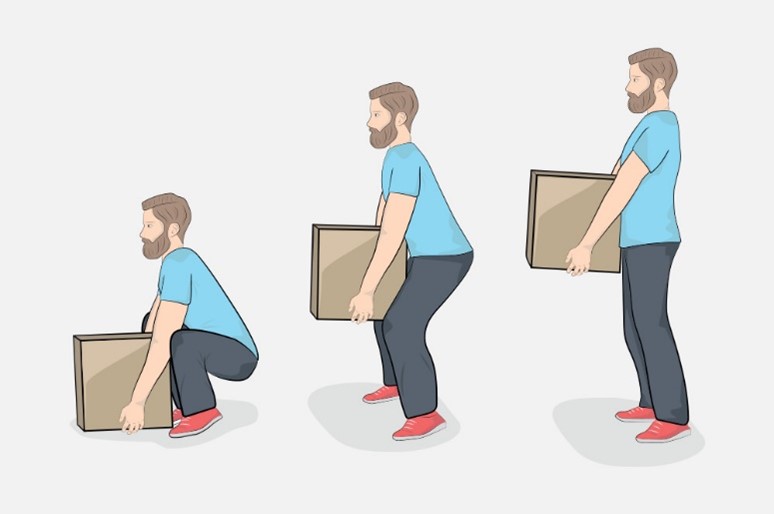
- Use the strongest muscles: keep loads near your waist and let your legs do the work, not your back.
- Pause and adjust: if the load shifts, put it down safely and reposition, rather than risking a bad lift.
- Take micro-breaks: stretching arms, shoulders, and back on tough jobs helps prevent repetitive strain.
Section 2: Real-World Case Study – Ceiling Tile Lifting Gone Right
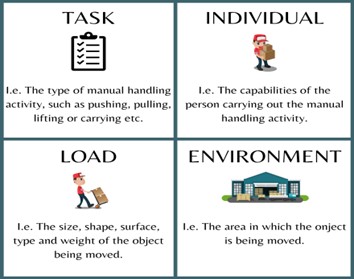
A team replacing a ceiling on the fourth floor used to carry 20kg boxes of tiles up themselves—until over half developed aches and at least one worker was off for two weeks. The new approach:
- Tiles now arrive on pallets, removed by tail lift.
- A pallet truck carries them to the lift, then onto the work area.
- Box weight was reduced to 17kg with a supplier switch.
Section 3: The Real Cost – UK Construction Injury Stats
Manual handling remains the biggest source of non-fatal work injuries in construction, making up 27% of all incidents in 2023/24. Over 472,000 workers suffered work-related musculoskeletal disorders last year, many due to poor or repetitive lifting. More than half (52%) of site musculoskeletal disorders are linked directly to manual handling.
Bottom Line: One bad lift doesn’t just hurt—it costs productivity, overtime, and can even mean loss of income for weeks.
Section 4: Common Construction Hazards & How to Spot Them
- Heavy or Awkward Loads: Overestimating capacity; always get help for heavy or odd-shaped items.
- Poor Posture: Hunched backs and twisting—always keep hips, shoulders, and feet aligned.
- Rushed Repetitions: Swinging blocks up scaffolds, over a fence, or tossing supplies leads to pulled muscles—slow down and use a system.
- Uneven Ground & Weather: Carrying loads across mud, gravel, or icy ramps increases risk; always check paths for hazards.
Result: Reduced manual lifts, fewer injuries, work completed sooner. This shows how simple process tweaks boost efficiency and health.
Section 5: Lessons from Real Accidents
- A construction worker carried heavy cement bags over rough ground, developing a hernia that required surgery—off work for months. Proper planning and use of wheelbarrows or small batch handling could have avoided both pain and lost time.
- A lift of a concrete beam without correct technique resulted in life-changing back injury and a rare company prosecution—reminder that safety is law, not just a good idea.
Section 6: Five-Step Risk Assessment for Site Managers
- Watch the actual job, not just what’s written in the risk assessment.
- Ask the crew—what feels awkward, and when do they “just get on with it”?
- Spot repetitive, strenuous, or awkward tasks (like carrying up stairs, into lofts, or out of deep trenches).
- Trial improvements: test lighter loads, mechanical aids, new delivery methods.
- Review and adapt—if the new way works, lock it in. If not, tweak and try again.
Section 7: Boosting Site Culture—Getting Everyone Involved
- Buddy up for team lifting—two sets of eyes reduce rushed errors.
- Set up short, fun quizzes or challenges on safe lifting, with spot prizes for correct answers.
- Print posters or quick reminder cards for tool belts, mess areas, and van dashboards.
- Encourage reporting: no blame, just fast fixes when a risk or injury is spotted.
Manual Handling FAQ
What is manual handling?
Manual handling refers to transporting or supporting loads by hand or bodily force. It covers lifting, carrying, pushing, pulling, lowering, or moving materials and equipment on site.
Why is manual handling training necessary?
Proper training helps workers avoid strain, sprains, and long-term injuries. It teaches safe techniques, risk assessment, and how to use equipment correctly—reducing preventable accidents and time off work.
What should I do if I feel pain after lifting?
Stop working immediately and report the pain to the supervisor. Early action can prevent more serious injuries. If pain persists, seek professional medical advice before returning to manual handling tasks.
Can lifting aids really make a difference?
Yes! Wheelbarrows, sack trucks, pallet trucks, and hoists lower physical strain, reduce fatigue, and cut injury risk when used correctly.
What’s the best posture for lifting?
Plant feet shoulder-width apart, bend the knees, keep your back straight, hold the load close to your body, and look forward. Pivot using your feet instead of twisting your back
How do I recognize a manual handling hazard?
Watch out for heavy, awkward, or unstable loads; slippery or uneven ground; poor lighting; and repetitive tasks without breaks. Report risks so the team can find safer solutions.
Who should report manual handling injuries or near-misses?
All staff are encouraged to raise concerns, injuries, and near-misses—no matter how minor. Quick reporting leads to safer practices and helps prevent future harm.
Can jobs always be reorganised to avoid manual handling?
Not always, but planning can minimize risks. Split heavy deliveries, use mechanical aids, and ask suppliers for smaller packaging or help with delivery arrangements.
What should I do if equipment for safe lifting isn’t available?
Pause the task and notify management immediately. It’s a legal requirement for employers to provide suitable equipment and safe systems of work—never improvise with tools that aren’t fit for the job.
Is manual handling still risky if I’m fit and strong?
Strength helps, but nobody is immune to sudden muscle strain, back injury, or joint damage. The right technique, support, and regular breaks are vital for everyone—no matter their fitness level.
Useful Written Manual Handling Tools
- Manual Handling Risk Assessment Templates
Standard forms allow employers to record hazards, who might be harmed, control measures needed, and follow up on actions. The five-step process covers identifying hazards, assessing risks, implementing controls, recording findings, and reviewing effectiveness.
- The MAC Tool (Manual Handling Assessment Charts)
Developed by HSE, the MAC Tool helps visually evaluate lifting, carrying, and team handling tasks, highlighting areas needing urgent intervention. It is especially useful for prioritising improvements and comparing risks on various site tasks.
- Written Checklists
Task-specific checklists guide supervisors through observation: describing the job, evaluating risks, deciding on avoidance or controls, and setting deadlines for remedial action. These are invaluable for ongoing monitoring and for prioritising high-risk tasks.
- Toolbox Talk Guides
Short, ready-made toolbox talk scripts can be downloaded or customised for briefing site teams on safe manual handling techniques or hazards. They save time for managers and help reinforce key messages regularly.
- Competency Assessment Forms
Templates for recording staff competency during manual handling—useful for training verifications and demonstrating compliance during audits.
- Standard Operating Procedures
Written instructions detailing safe handling processes for common materials (roof tiles, cement bags, plant equipment), which can be incorporated into site induction packs and method statements.
Most of these resources are available to download free from HSE and industry bodies; they offer structure for better compliance and practical hazard management. Regular use brings consistency, ensures legal requirements are met, and makes the workplace safer for everyone.

Speak with our Safety Experts