COSHH: Safeguarding Health in the Workplace – September Newsletter
The COSHH (Control of Substances Hazardous to Health) Regulations are a legal framework designed to protect workers in the construction sector from harmful exposure to hazardous substances. Proper COSHH management is vital to construction site safety and the long-term health of workers—a responsibility not just for legal compliance, but for ethical business practice and productivity.
Ensuring safety when working with hazardous substances remains a legal requirement and a moral responsibility for all UK businesses. The Control of Substances Hazardous to Health Regulations (COSHH), under the Health and Safety at Work Act 1974, set out clear expectations for protecting employees from ill health due to dangerous chemicals and biological agents.
What Is COSHH and Why Does It Matter?
COSHH is a set of regulations requiring employers to control hazardous substances that can cause ill health, from dusts and chemicals to biological agents and fumes. Within construction environments, these substances are widespread—from cement and paints to wood and silica dust—and represent significant health hazards when not effectively managed.
Major Health Risks in Construction
The construction industry faces some of the most severe occupational health risks, with hazardous substances contributing to thousands of cases of occupational cancers and respiratory disease. The most frequent substances of concern are:
- Asbestos: Formerly used in older buildings, strongly linked to occupational cancer.
- Silica dust: Released during brick cutting or drilling concrete, causes serious respiratory illnesses and cancers.
- Cement: Can irritate or damage skin over time.
- Lead: Used in older paints and plumbing.
- Wood dust, welding fumes, and solvents: Common in joinery, painting, and adhesive work—linked to asthma and other chronic conditions.
Key Employer Responsibilities Under COSHH
- Identify hazardous substances: Maintain a register of all materials that pose a health risk, using Safety Data Sheets and clear labels.
- Conduct COSHH risk assessments: Legally required for every hazardous substance, especially if employing five or more people. Assess who could be harmed, how, and what controls are needed, and keep written records.
- Control exposure: Eliminate risks wherever possible, substitute safer materials when feasible, and implement controls like PPE, ventilation, or extraction systems.
- Training and instruction: Train staff in safe handling, emergency procedures, and proper use of protective equipment, as required by Regulation 12.
- Monitor and review: Ongoing health surveillance, especially for respiratory or skin sensitisers, and annual updates to assessments are required under Regulation 10.
Practical COSHH Management Steps
Step 1: Identification
List all hazardous substances present on your construction site, both those brought in (cleaners, fuels, adhesives) and those produced during processes (cutting, welding, mixing cement). Always check product labels and suppliers’ COSHH/SDS information for hazards.
Step 2: Risk Assessment
For every substance, carry out a COSHH risk assessment:
- Describe hazards and possible health effects.
- Identify who may be exposed and how.
- Determine, document, and review control measures. Maintain records, as required by law, and update assessments any time processes, substances, or controls change.
Step 3: Control Measures
Implement a hierarchy of controls:
- Elimination: Remove hazardous substances if possible.
- Substitution: Use less hazardous alternatives.
- Engineering controls: Use extraction, isolation, or ventilation systems.
- Administrative controls: Rotate tasks, reduce exposure time.
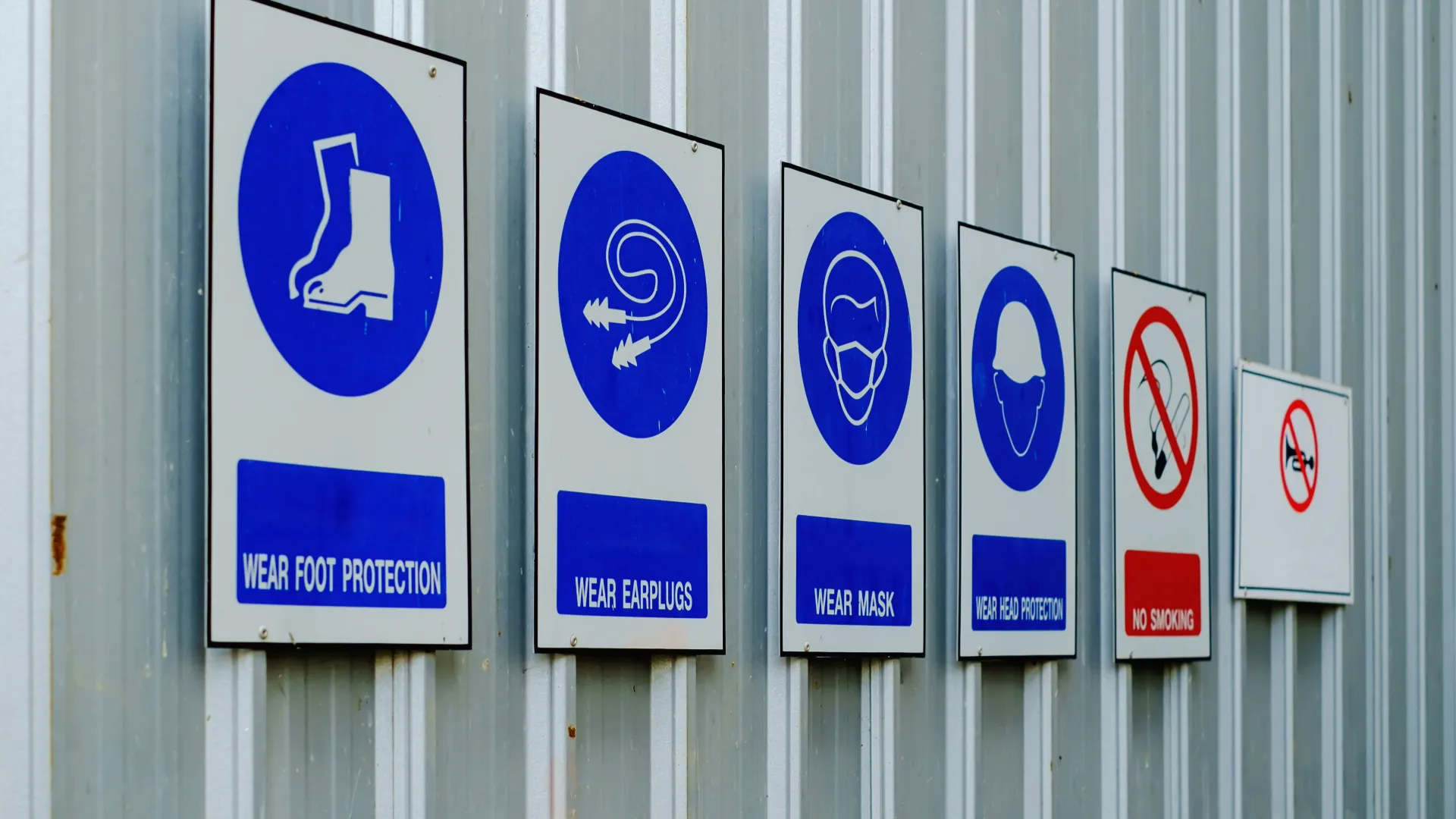
- PPE: Provide protective gear—only as a last resort. Regularly inspect and maintain equipment and controls.
Step 4: Training and Supervision
Employees must receive specific training for each hazardous substance (using, storing, disposal, and spill response), including visual hazard symbols and SDS awareness.
Step 5: Emergency Planning
Develop and communicate emergency procedures for accidental exposure or spillage. Spill kits must be readily available and staff must know how to use them.
Common COSHH Failures in Construction
- Relying solely on PPE rather than more robust controls.
- Failing to identify all hazardous substances (including those produced by tasks).
- Incomplete or outdated risk assessments.
- Poor training and supervision, especially for new or temporary staff.
- Not regularly reviewing procedures as site conditions change.
- Inadequate response to spills, leaks, or exposures.
These failures can lead to legal penalties, illnesses, lost productivity, reputational damage, and, most seriously, long-term health impacts for staff.
COSHH Documentation Essentials
A comprehensive approach includes:

- COSHH register for all hazardous substances.
- Safety Data Sheets (SDS) for each chemical/material.
- Written COSHH risk assessments and annual reviews.
- Records of training, inspections, and maintenance.
Templates and risk assessment examples are widely available from health and safety organizations and can be tailored for each construction activity.
Conclusion: Building a Strong COSHH Culture
Effective COSHH management in construction means more than legal compliance—it’s about fostering a safety culture where every worker understands the risks, control measures, and procedures for every hazardous substance encountered. Regular auditing, proactive training, and layered controls keep sites safe, healthy, and operational.
If more detailed templates, site-specific examples, or interactive tools are required, numerous resources—including COSHH register templates and risk assessment guides—are available for download from industry and regulatory bodies.

Environmental Update
Industry-Wide Environmental Impact
The construction sector is responsible for nearly 40% of global carbon emissions, leading governments and industry leaders to set ambitious reduction targets. In the UK, the “Construction 2025” strategy aims to cut greenhouse gas emissions in the built environment by 50% by the end of this year. While there have been strides, particularly from the concrete and cement sectors, the pressure remains to address embodied carbon—emissions from building materials and processes—which currently lacks comprehensive regulatory oversight.
Sustainable Building Practices
Sustainability is becoming both a regulatory requirement and an operational pillar for new builds and renovations. Key areas include:

- Adoption of low-carbon materials such as recycled steel and sustainable concrete alternatives.
- Modular construction and off-site methods that minimise waste and improve efficiency.
- Electrification of heating and cooling, along with renewable energy installations like solar panels and transparent PV windows, enabling greater energy self-sufficiency.
- Voluntary standards such as BREEAM and LEED are increasingly sought after, despite higher upfront costs, giving firms a marketing and competitive advantage.
Waste Management and Circular Economy
Globally, construction and demolition generate over 2 billion tons of waste annually—about one-third of all waste produced. In 2025, big changes affect UK businesses, including mandatory Simpler Recycling from April. Firms with more than 10 employees must implement segregated bins for food, paper, card, plastic, metal, and glass. Coupled with landfill tax increases and ambitious recycling targets, businesses must adapt their site operations and procurement processes to meet evolving regulations.
The sector is making substantial investments in waste recycling and material reclaim. Advanced processes now allow concrete, aggregate, and metals to be reused in new builds, road construction, and landscaping. Companies like Holcim are pioneering technology platforms (ECOCycle) for efficient recycling and reuse.
Technological Advancements
Technology is reshaping construction’s environmental footprint in major ways:
- Advanced sustainable materials, such as self-healing concrete and engineered timber (CLT), reduce ongoing emissions and waste.
- Robotics and automation streamline repetitive tasks, increase precision, and cut down inefficiency and resource consumption on sites.
- Artificial Intelligence (AI) and Internet of Things (IoT) drive data analysis and smart building management, optimizing energy use and predicting maintenance needs for greater long-term sustainability.
- Digital construction platforms allow better tracking and reporting on compliance, waste, and resource use, providing new transparency and control to site managers.
Policy, Financing, and Market Challenges
While progress is evident—20% of new commercial builds in OECD countries achieved green certifications in 2023—regulatory change remains slow, and investment in energy efficiency fell by 7% last year. Global and regional policies increasingly require carbon inventories for large projects, but major gaps persist, especially around embodied carbon and long-term financing. Innovation funds and incentive programmes in China and Australia show that government action is crucial in unlocking adoption of low-carbon solutions.
Workforce and Leadership Development
Meeting 2025 targets and scaling sustainable construction will require upskilling the workforce, closing skill gaps, and fostering diversity in leadership roles. Workforce development programmes are increasingly focused on green trades and digital skills.
Future Outlook
As 2025 unfolds, the construction industry’s environmental drive is set to intensify, shaped by stricter regulatory demands, technological innovation, and the urgent need for climate resilience. Firms that embrace these changes—by adopting low-carbon materials, integrating new technologies, and improving waste management—will be better placed to meet both legal obligations and growing client expectations for sustainability.
Key Takeaways
- Environmental impact reduction, especially tackling embodied carbon, remains the industry’s biggest challenge in 2025.
- Sustainable building practices, modular construction, and renewable energy solutions are becoming standard for competitive, compliant firms.
- Waste management regulations require immediate action as new UK laws enforce separation and recycling on every site.
- Tech adoption is critical—from digital platforms to robotics—to meet ambitious carbon and waste goals while staying profitable and safe.

Speak with our Safety Experts