No-one is in charge of health and safety” – stone company fined after workshop floor covered in hazardous dust
22nd May 2025
A company that manufactures popular stone kitchen worktops has been fined £60,000 after it repeatedly failed to protect workers from exposure to hazardous dust.
I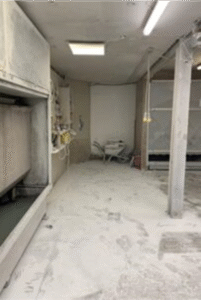 nspectors from the Health and Safety Executive (HSE) visited Inova Stone Ltd nine times over a six year period, and found little or no improvement across several areas of concern.
HSE inspectors were left stunned after visiting the company’s premises in Slough in May 2021 when employees told them that ‘no-one is in charge of health and safety’. That visit had come about after concerns had been raised about unsafe working practices. Inspectors soon saw the complacency for themselves, after identifying several breaches of health and safety law, including a failure to control exposure to respirable crystalline silica (RCS).
The workshop floor was caked in dust, suggesting an absence of effective controls.
Stone worktops are becoming increasingly popular in home kitchens. Processing stone, including engineered stone, by cutting, chiselling and polishing, can create dust that contains airborne particle that carry RCS.
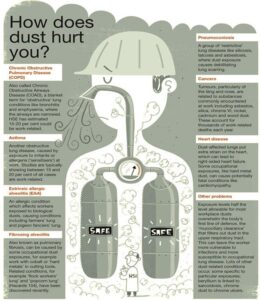
RCS dust is invisibly fine and can reach deep inside the lung. It can cause permanent lung damage before symptoms develop. Stone workers are at risk of exposure to airborne particles of stone dust containing RCS, with the risk higher when exposure is prolonged and uncontrolled. Over time, breathing in these silica particles can cause irreversible, life-changing and often fatal respiratory conditions such as silicosis, chronic obstructive pulmonary disease and lung cancer.
As well as failing to protect workers from the potentially deadly dust, HSE inspectors also found Inova Stone Ltd routinely allowed them to use unguarded machinery. In addition, the company also had heavy stone slabs not being stored safely, putting workers at risk of serious injury.

As a result of the inspection, the company was served with four improvement notices, with the resulting HSE investigation revealing similar action had also been taken four years earlier, in 2017.
Inova Stone Ltd of Willow Road, Colnbrook, Slough, pleaded guilty to breaching Section 2(1) of the Health and Safety at Work etc. Act, as well as three charges for failure to comply with an improvement notice. The company was fined £60,000 and ordered to pay £7,363 costs at Staines Magistrates Court on 20 May 2025.
After the hearing, HSE Principal Inspector Karen Morris said: “Inova Stone Ltd failed to comply with legal notices requiring them to make improvements and repeatedly showed a lack of commitment to managing health and safety.
“We were stunned when employees told us that ‘no-one was in charge of health and safety’.
“After being provided with advice and guidance over several years, the company had plenty of opportunities to comply with the law, yet they consistently failed to do so.
“The fine imposed should send a clear message to employers that the risks from working with engineered stone must be taken extremely seriously.”
Construction Dust
Construction Dust: Protecting Your Health on Site
Construction dust is more than just a nuisance—it’s a serious health hazard that can cause life-changing diseases and even premature death. Every year, over 500 UK construction workers are believed to die from exposure to silica dust alone, with thousands more suffering from lung diseases caused by regular inhalation of hazardous dusts.
What Is Construction Dust?
Construction dust is a general term for the range of dusts commonly found on building sites, including:
- Silica dust: Created when working on materials like concrete, mortar, and sandstone (also known as respirable crystalline silica or RCS).
- Wood dust: Produced when cutting or sanding softwood, hardwood, and wood-based products such as MDF or plywood.
- Lower risk dusts: Generated from materials like gypsum (plasterboard), limestone, marble, and dolomite.
Health Risks
Breathing in construction dust regularly can lead to:
- Lung cancer
- Asthma
- Chronic Obstructive Pulmonary Disease (COPD)
- Silicosis
These illnesses can result in permanent disability and early death. The risk is especially high in construction due to frequent use of high-energy tools and materials that generate significant dust.
Legal Responsibilities
Employers have a legal duty under the Control of Substances Hazardous to Health (COSHH) Regulations 2002 to assess, control, and review the risks from hazardous construction dusts. This includes:
- Conducting risk assessments for all dust-generating activities.
- Implementing effective control measures.
- Regularly reviewing and updating controls to ensure ongoing protection.
Failure to comply can result in enforcement action, including fines and site shutdowns.
Controlling Construction Dust
Before Work Starts:
- Use pre-cut materials or the correct size to reduce on-site cutting.
- Opt for less powerful tools where possible (e.g., block splitters instead of saws).
- Consider alternative work methods (e.g., nail guns instead of drilling).
During Dust-Generating Work:
- Water suppression: Damps down dust clouds—ensure enough water is used throughout the task.
- Vacuum extraction: Attach industrial vacuums to tools to capture dust at the source.
- Local Exhaust Ventilation (LEV): Use extraction units and accessories to remove dust from the air.
Personal Protective Equipment (PPE):
Provide and ensure the correct use of Respiratory Protective Equipment (RPE), usually FFP 3 dust masks or airfed hoods, especially when other controls cannot eliminate exposure.
Site Dust Management
A Dust Management Scheme should be in place from the start of every project. This includes:
- Identifying dust-generating tasks and their risks.
- Implementing tailored control measures for each activity.
- Monitoring dust levels, especially during high-risk phases like demolition.
- Keeping records in a site Dust Management Folder for inspection by authorities.
Monitoring and Review
- Regularly monitor dust levels, particularly PM10 (particulate matter), to ensure controls are effective and to protect neighbouring communities.
- Review controls and update risk assessments as site activities or conditions change.
Key Takeaways
- Construction dust can cause serious, irreversible health problems.
- Legal requirements under COSHH demand robust risk assessment, control, and review.
- Effective dust control protects workers, the public, and your business.
- HSE inspectors are actively targeting dust management on construction sites—be prepared.
Stay safe: Assess, Control, and Review your dust risks on every job. For more guidance, visit the HSE website or consult a qualified health and safety advisor.

Construction Dust and the Environment
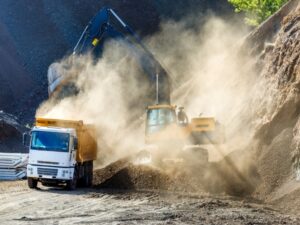
Construction dust is a pervasive byproduct of building activities, arising from processes such as demolition, excavation, cutting, grinding, and the movement of vehicles and materials on-site. While essential for urban development and infrastructure, the construction industry is a significant contributor to environmental pollution, with dust being a primary concern for air, water, and soil quality.
Air Quality and Atmospheric Pollution
Construction dust is primarily composed of particulate matter (PM), including PM10 (particles less than 10 microns in diameter) and, to a lesser extent, PM2.5 (particles less than 2.5 microns). These fine particles are invisible to the naked eye and can travel long distances from their source, especially in windy conditions. Major sources include materials such as concrete, cement, wood, stone, and silica, as well as diesel exhaust from construction machinery.
The environmental impact of airborne construction dust is significant. It reduces local air quality, contributing to the overall particulate load in urban environments. In cities like London, construction activities are estimated to be the third largest source of PM2.5 emissions, accounting for about 15% of local emissions, following road transport and other sources. Elevated levels of particulate matter can linger in the atmosphere for days or even weeks, affecting not just the immediate vicinity of construction sites but also distant ecosystems and communities.
Effects on Ecosystems and Wildlife
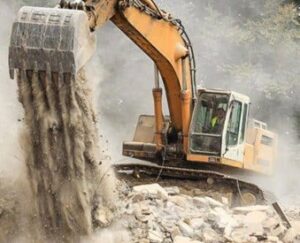
Dust emissions from construction sites have direct and indirect effects on local ecosystems. When deposited on plant surfaces, dust can block sunlight, hinder photosynthesis, and damage sensitive vegetation. Over time, this soiling can reduce plant growth, alter species composition, and decrease biodiversity. Dust settling on soil and water bodies can disrupt natural processes, degrade soil quality, and affect aquatic habitats by increasing sedimentation and altering water chemistry.
Wildlife is also impacted, as dust can interfere with feeding, breeding, and communication patterns. For example, dust can clog the respiratory systems of small animals and insects, reduce the availability of clean water, and contaminate food sources.
Water and Soil Pollution
Construction dust does not only remain airborne; it can settle on surfaces, be washed into stormwater systems, and eventually reach rivers, lakes, and groundwater. This process introduces fine particulates and potentially hazardous substances—such as heavy metals, silica, and chemical residues—into aquatic environments, where they can harm aquatic life and degrade water quality. Likewise, dust deposition on soil can alter its structure, reduce fertility, and introduce contaminants that persist in the environment.
Contribution to Climate Change
Beyond particulate pollution, construction activities also emit greenhouse gases, including carbon dioxide and nitrogen oxides, mainly from diesel-powered machinery and vehicles. These emissions contribute to climate change, further amplifying the environmental footprint of the construction sector.
Mitigation and Monitoring
Given the environmental risks, monitoring and controlling construction dust is essential. Environmental monitoring technologies can help identify sources and levels of dust emissions, enabling site operators to implement effective dust suppression and mitigation measures—such as water spraying, covering materials, and restricting vehicle movements. Regulatory frameworks, though limited in some regions, increasingly require construction projects to demonstrate compliance with air quality standards and to minimise dust-related nuisance and ecological harm.
Conclusion
Construction dust is a significant environmental pollutant, with far-reaching impacts on air quality, ecosystems, water, and soil. Its effects extend beyond construction sites, affecting human health, wildlife, and the broader environment. Effective monitoring, regulation, and sustainable construction practices are vital to reducing these impacts and ensuring that urban development proceeds without compromising environmental integrity.
Speak with our Safety Experts