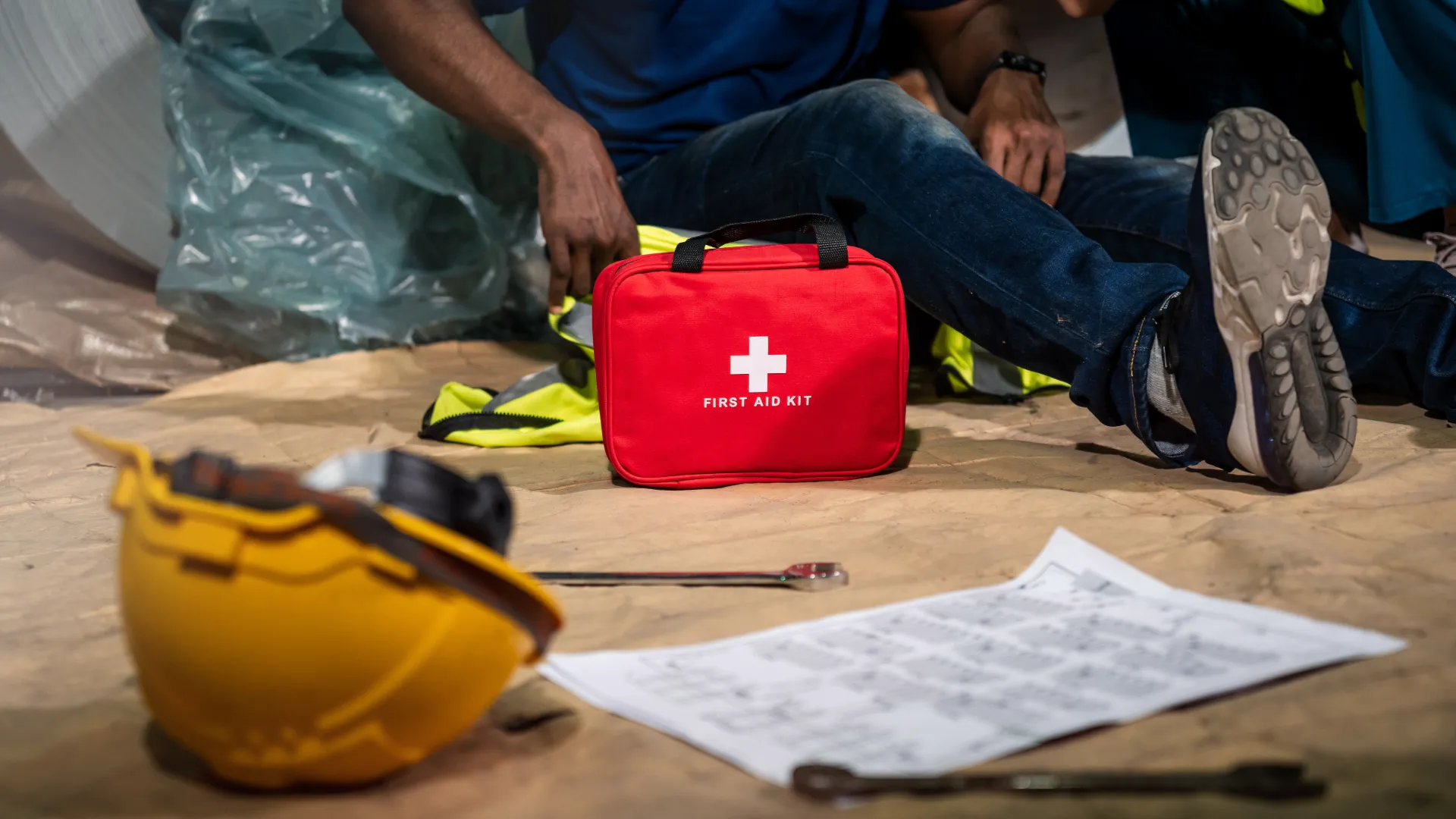
Construction sites bring together different trades, contractors, machinery and changing work activities, so health and safety training needs to be more than a one-off induction. Workers need to understand the risks linked to the jobs they are carrying out, the controls in place and what is expected of them while on site.
A well-planned training programme can help make that information clear and keep it relevant as the project develops. This can include site inductions, toolbox talks, task-specific training and refresher sessions, depending on the work being carried out and the people involved. In this blog, we’ll look at how construction businesses can put effective health and safety training programmes in place and keep them working in practice.
Why is Health and Safety Training important on UK Construction Sites?
Construction workers can face very different risks depending on their trade, the stage of the project and the work happening around them. Training gives people the knowledge they need to recognise those risks, understand the controls in place and carry out their work safely.
It also needs to reflect what is actually happening on site. An initial induction may cover site rules and general arrangements, while further training may be needed for specific equipment, activities or responsibilities. If the work changes, new machinery is introduced or different risks appear, existing training may need to be reviewed or updated. HSE guidance makes clear that adequate training and supervision are part of making sure people can work safely.
Training also contributes to competence, but the two should not be treated as exactly the same thing. HSE describes competence as a combination of training, skills, experience and knowledge, together with a person’s ability to apply them safely. This is particularly relevant in construction, where completing a course does not automatically mean someone is ready to carry out every task without further experience or supervision.
Legal Obligations within the UK
For construction work in England, Scotland and Wales, employers and contractors have legal responsibilities around the information, instruction, training and supervision provided to workers. The Health and Safety at Work etc. Act 1974 sets out the wider duties employers have towards their employees, while HSE guidance states that workers must be given adequate training and supervision to enable them to work safely.
The Construction (Design and Management) Regulations 2015 (CDM 2015) place further responsibilities on those carrying out construction work. Contractors must make sure the people they appoint have the skills, knowledge, experience and, where required, training needed for the work. Where someone does not yet have this experience, suitable training and supervision must be provided so they can work without putting health and safety at risk.
Some activities have additional training requirements. For example, the Provision and Use of Work Equipment Regulations 1998 (PUWER) require people who use work equipment, as well as those who supervise or manage its use, to receive adequate health and safety training. What counts as adequate will depend on the task, equipment, existing competence of the worker and the risks involved.
The legal framework is different in Northern Ireland, where workplace health and safety is overseen separately rather than by HSE.
Identifying General and Role-Specific Risks
Health and safety training should reflect both the risks that affect everyone on site and those linked to a particular job or activity. A general site induction is useful, but it will not cover everything a worker may need to know once they begin carrying out their role.
Training may need to include areas such as:
Risk assessment – workers should understand the hazards linked to their work, the control measures in place and what to do if conditions change.
PPE – training should cover when protective equipment is required, how it should be used and any limitations it may have.
Manual and mechanical handling – workers may need guidance on safe lifting techniques as well as the correct use of equipment used to move materials around site.
Emergency procedures – everyone should know what to do in the event of a fire, accident, evacuation or other emergency.
Specialist training – certain activities may need more specific instruction, including working at height, confined space work or handling substances covered by COSHH.
The level of training required will depend on the work being carried out. Someone using specialist equipment or working in a higher-risk environment may need more detailed training than someone whose role does not involve those hazards. The important point is that training should match the actual work rather than relying on the same programme for every person on site.
Implementing Training and On-Going Management
Putting a training programme in place is only the first part of the process. Construction work changes as projects progress, so training should be reviewed regularly to make sure it still reflects the work being carried out and the risks people are likely to face.
Training records should be kept so employers can see who has completed each course, when it was carried out and whether any refresher training is due. This is especially useful where workers need specific training or certification before carrying out certain tasks.
Ongoing management can also include toolbox talks, site briefings and additional instruction when work methods, equipment or site conditions change. If an issue is identified during an inspection or following an incident, it may also highlight a gap in knowledge that needs addressing.
Supervisors and managers have an important role here too. They should be able to spot when someone needs more support, further instruction or closer supervision rather than assuming that previous training will always be enough.
Finding a Health and Safety Training Provider
When choosing a health and safety training provider, look for someone who understands the construction industry and can tailor the training to the work your team actually carries out. Relevant experience, clear course content and the ability to explain safety requirements in a practical way are all worth considering.
Hurst Setter provides health and safety training for construction businesses, helping employers give their teams the knowledge they need to work safely and understand their responsibilities on site. Training can form part of a wider approach to health and safety, alongside areas such as risk assessments, site inspections and ongoing consultancy support.
If you are reviewing your current training arrangements or need support putting a programme in place, contact Hurst Setter to discuss your requirements.
Speak with our Safety Experts